Lesson 13 · Intermediate
Polariser: cutting glare on water
Read first:
What you will learn
- What a polarising filter does.
- How to see below the surface and deepen a blue sky.
- When a polariser does not help.
The lesson
Light waves vibrate in all directions. Light that bounces off a flat surface such as water, a window or a wet deck becomes partly polarised: most of its vibration is lined up in one direction, and that is the glare. A polarising filter lets through only light that vibrates in one direction. Turned to the right angle, it blocks that glare and lets the rest through.
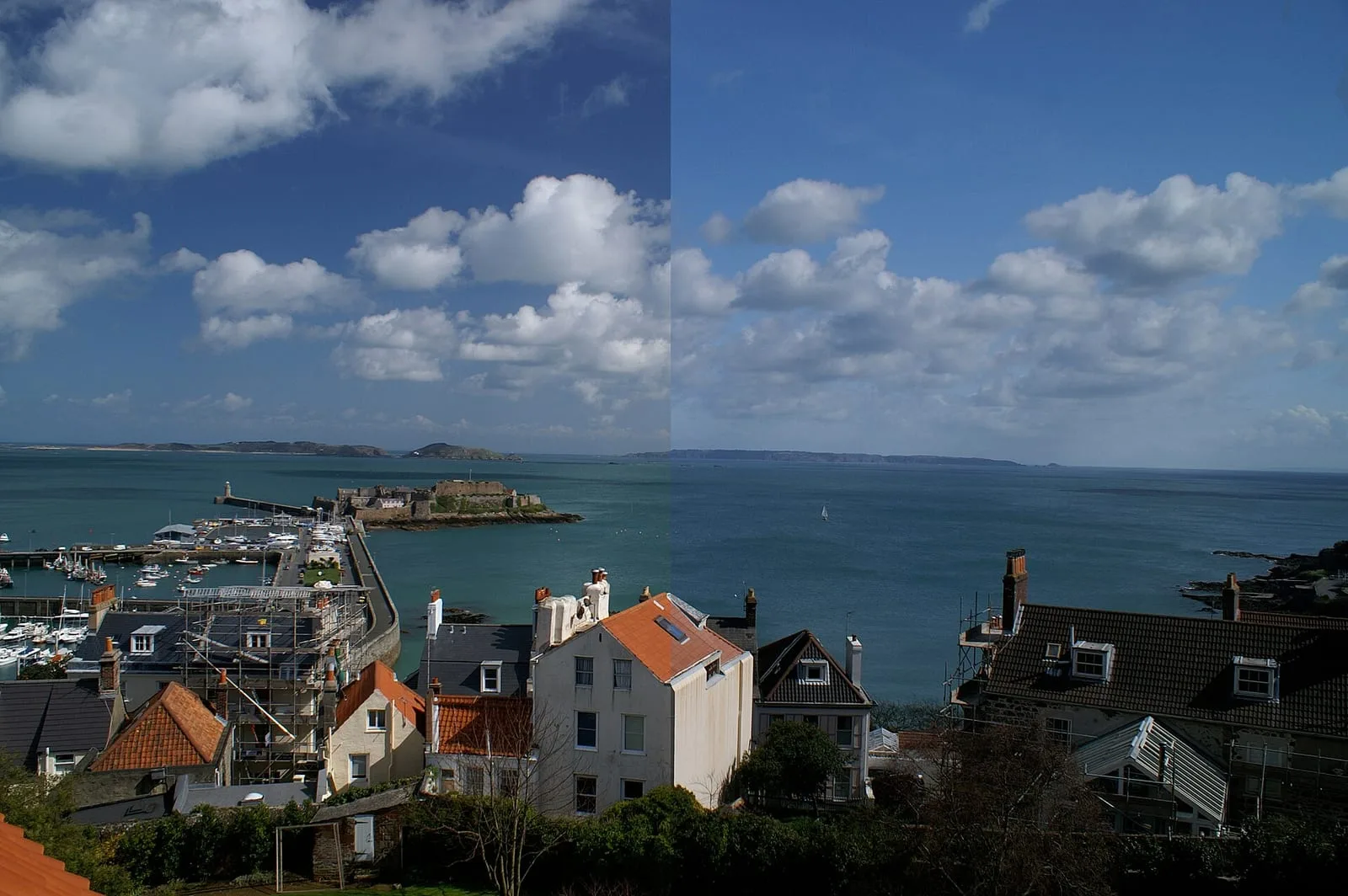
With a polariser fitted on a camera, you rotate it while watching the screen. As the glare drops you see through the surface: stones and weed on the bottom of a clear bay, fish near a pontoon. Reflections of the sky on the water become fainter. The filter also darkens a blue sky and makes white clouds stand out, but only when you shoot at about a right angle to the sun. Pointing straight at or away from the sun, it does almost nothing to the sky.
Cost: it takes away up to about two stops of light, so use a steadier hand or a higher ISO. Modern autofocus cameras need the circular type of polarising filter. On very wide lenses the sky can look uneven. Do not use it when you want a reflection. Remember that at sea, spray and salt on the filter are a real problem, so carry a cloth.
Most phones have no filter thread, though clip-on polarisers are sold for some. Polarising sunglasses held in front of the lens can show the effect, but they may make the phone screen look dark when you turn them, so judge by the photo. Without a filter, simply changing your angle changes the reflection. Note that this effect cannot be recreated in editing.
Physics note
Light reflecting from water is most strongly polarised when it strikes the surface at a particular angle, called Brewster’s angle, about 53 degrees from the vertical for a flat water surface. At that angle the reflected light vibrates only parallel to the surface, and a filter turned the other way blocks it nearly completely.
Practice
- Photograph a sunny puddle or pool with and without a polariser (or polarising sunglasses held in front of a phone lens). Describe the difference.
- Rotate the filter slowly and note how the glare changes.
- Photograph the same sky with the sun on the side and with the sun behind you. Where is the effect strongest?
- Which would you not use a polariser for: seeing fish, or capturing a mirror reflection of a boat?
- Roughly how many stops of light can it cost at most?