Lesson 3 · Beginner
Shutter speed: freeze spray, blur the wake
What you will learn
- What shutter speed means and how it is written.
- How fast and slow speeds change moving water, flags and boats.
- A safe speed to start with for a hand-held shot.
The lesson
The shutter decides how long the sensor collects light. It is written as a fraction of a second: 1/1000 is very short, 1/60 is short, 1 s and longer is slow. A common run of whole steps is 1/1000, 1/500, 1/250, 1/125, 1/60, 1/30, 1/15, 1/8, 1/4, 1/2, 1 second. Each step to a longer time doubles the light.
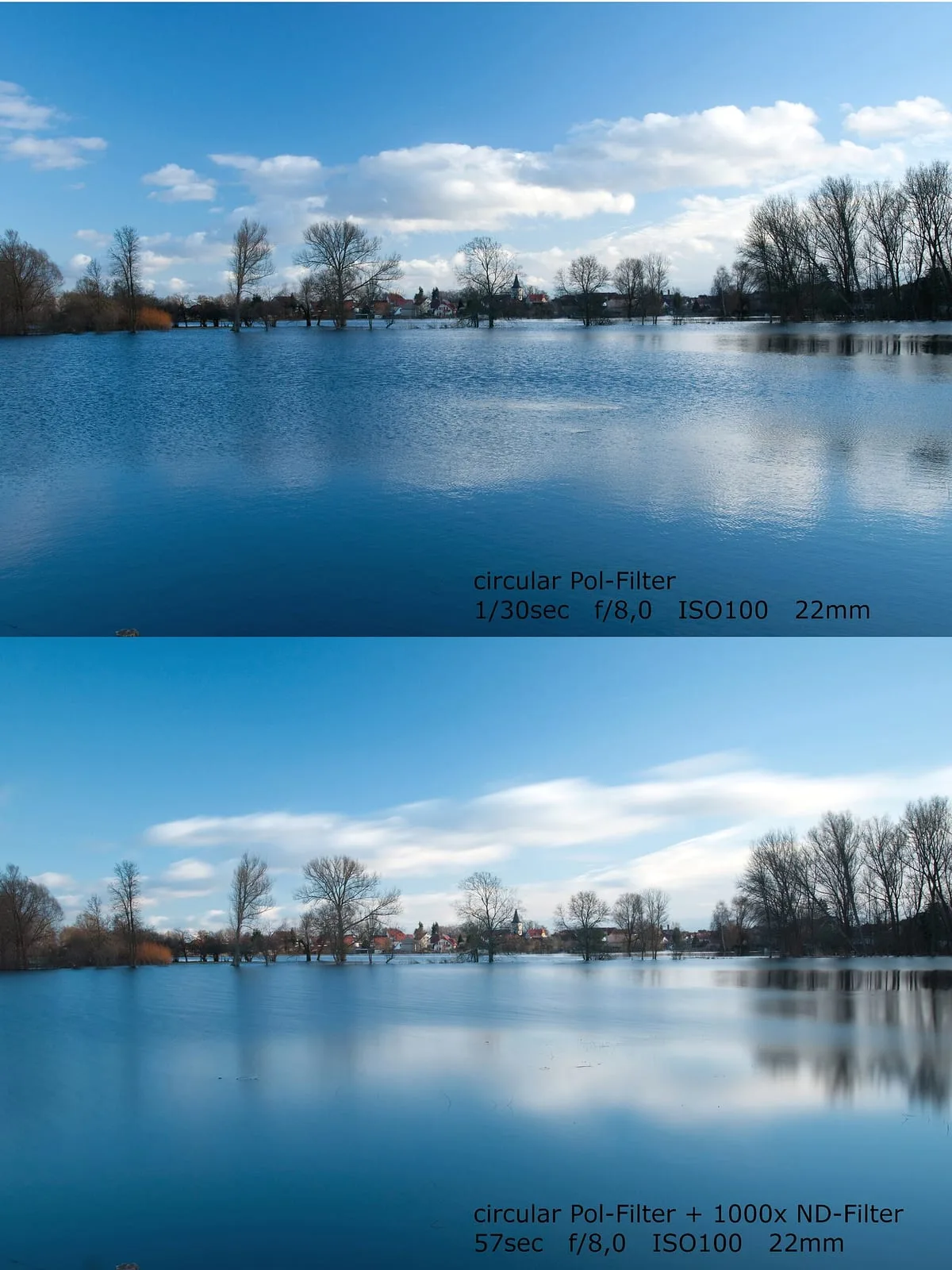
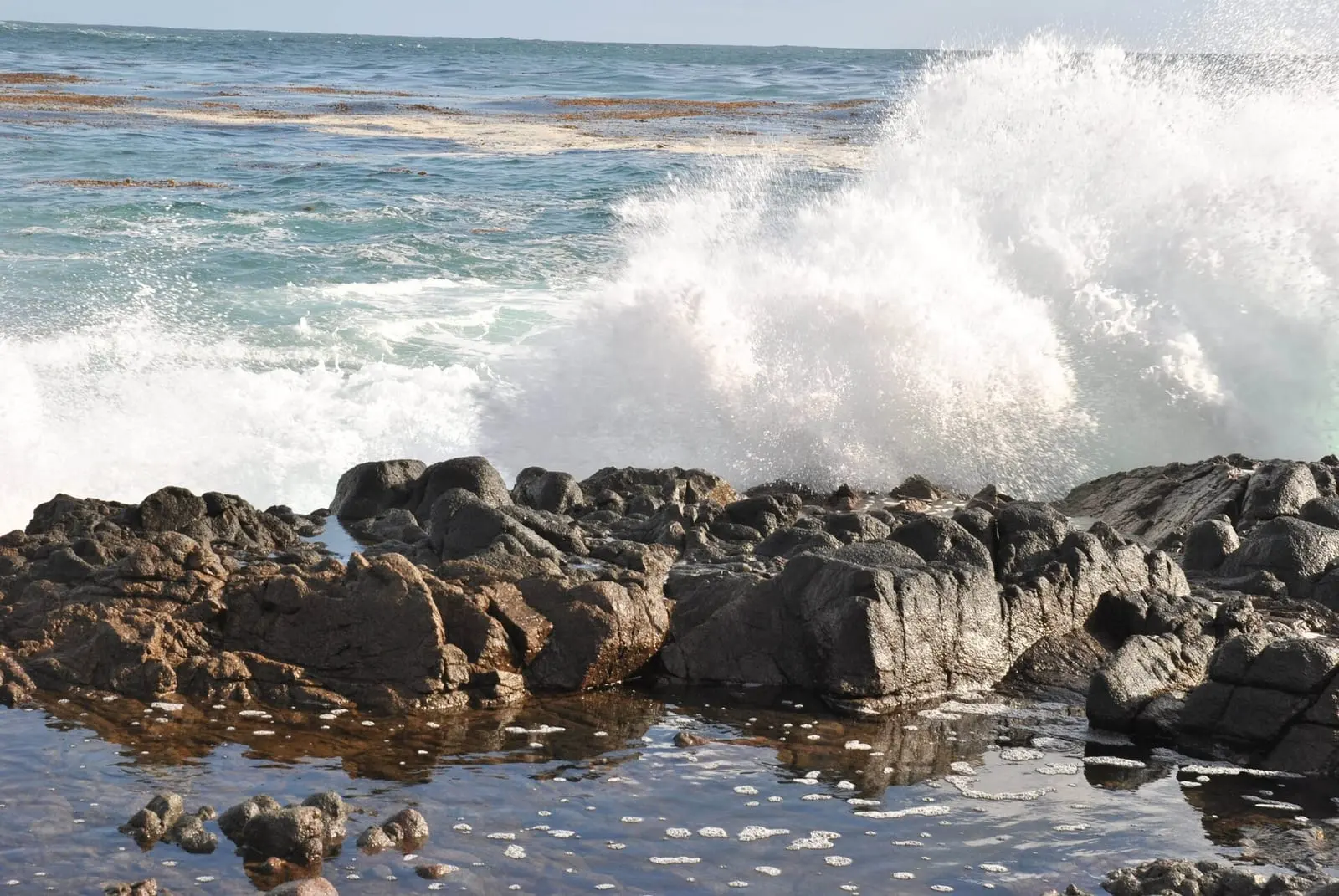
The main effect is motion. A fast shutter freezes: a wave crest looks like a sculpture, spray hangs in the air, a flag looks stiff. A slow shutter blurs: moving water becomes silky, and a wake becomes a soft streak. Both are good. The choice is what story you want.
The second effect is your own movement. If the shutter stays open too long, the shake of your hands shows as blur across the whole picture. A traditional rule of thumb, from 35 mm film cameras, is to use a speed no longer than about one over the focal length: roughly 1/60 s with a 50 mm lens and 1/250 s with a 200 mm lens. Stabilised lenses and small sensors shift the numbers. On a moving deck, go faster than that, or lean on something solid.
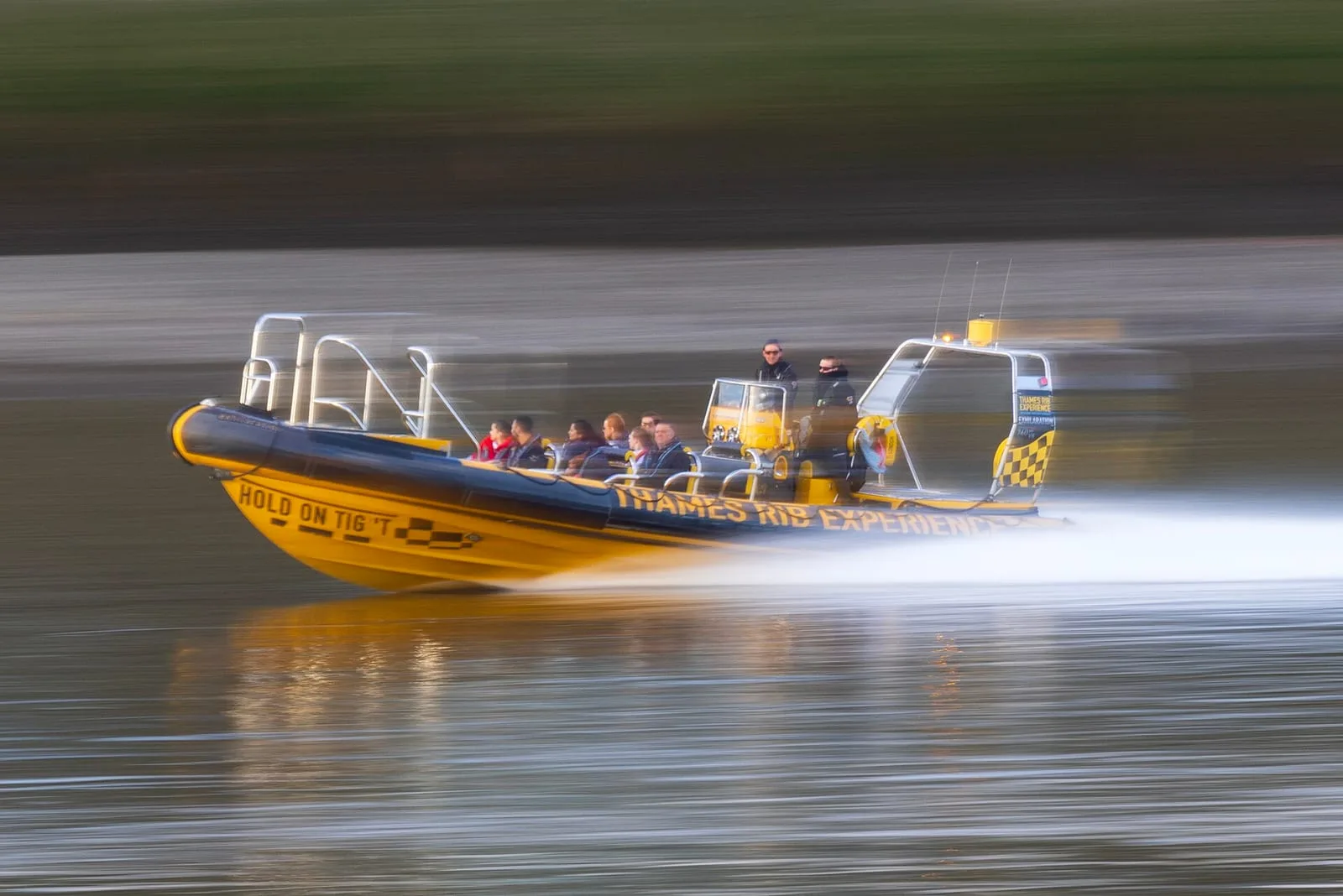
To follow a moving boat so it is sharp and the background streaks, pan: swing the camera smoothly along with the boat while the shutter is open, at a speed that suits the subject: very roughly 1/40 s for someone walking or running and 1/250 s for something fast such as a powerboat. Slower gives more background blur and more ruined frames.
Phones: they usually pick the shutter themselves. Some camera apps let you choose, and some phones have a long-exposure mode for moving water.
Physics note
Motion blur length on the picture equals the speed of the image across the sensor multiplied by the exposure time. Halve the time and the blur halves.
Practice
- Photograph a running tap at 1/1000 s and then at 1/4 s (use a tripod or lean the camera on a table). Describe the difference.
- Hold a camera and take a shot at 1/15 s, then at 1/250 s. Which is sharper and why?
- A flag flaps in the wind. Which speed freezes it, 1/30 or 1/500?
- Try panning on a person walking or a passing car at 1/60 s. Try ten times, keep the best.
- If you move from 1/125 s to 1/500 s, how many stops of light do you lose?