Lesson 4 · Beginner
ISO and noise: dusk in a harbour
What you will learn
- What ISO does and what price you pay for raising it.
- What noise looks like.
- How to pick an ISO at dusk.
The lesson
ISO is the third exposure control. It does not let more light in. Instead it works like turning up the volume on the signal the sensor has collected. Doubling ISO doubles the brightness: ISO 100, 200, 400, 800, 1600, 3200 and so on, each a stop.
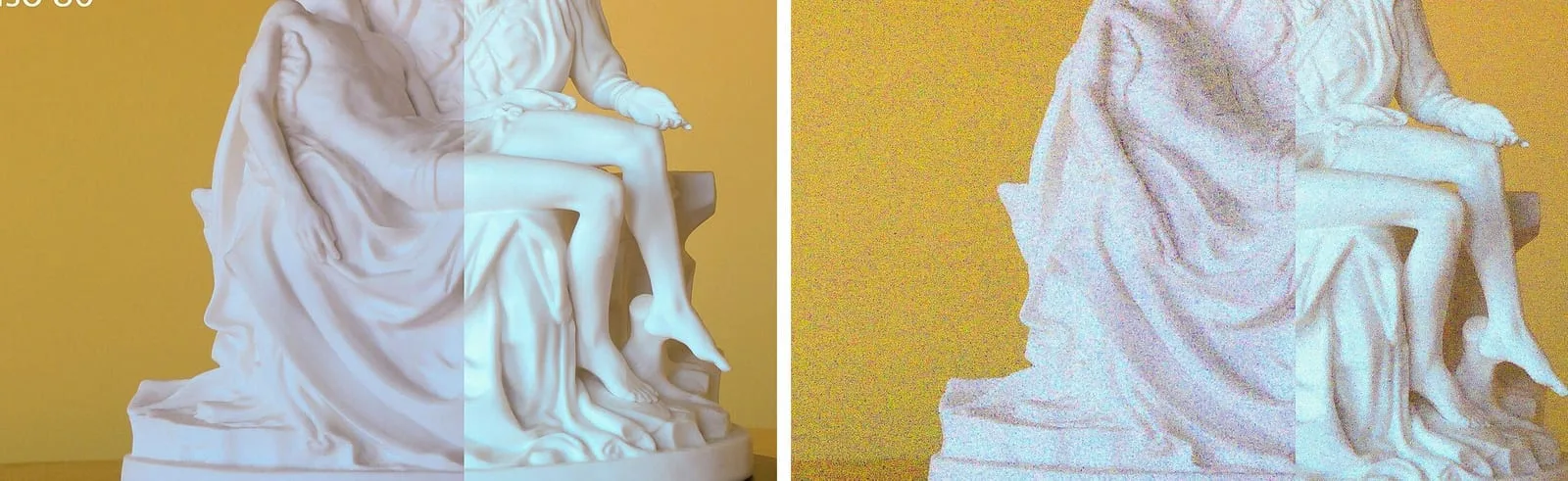
The price is noise. Noise is a speckle of random colour and brightness dots, most visible in the dark parts of a picture. It exists because light arrives in small packets, and a dark scene delivers few of them, so the count is uncertain. Amplifying makes that uncertainty visible. A larger sensor gathers more total light for the same picture, so it is usually cleaner, which is a big part of why a big camera beats a phone in the dark.
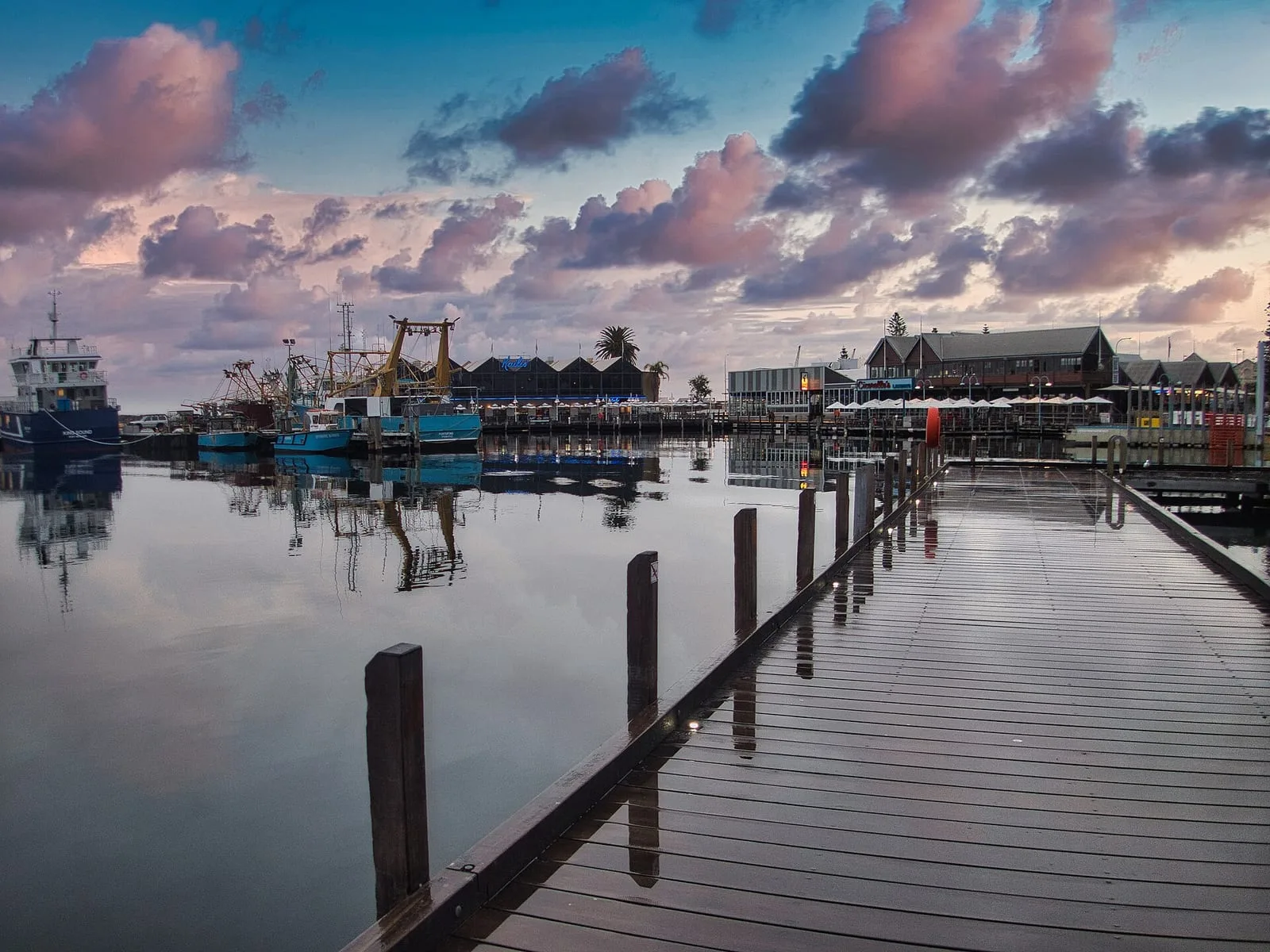
Practical order for dusk in a harbour: first open the aperture, then slow the shutter as far as a steady hand or support allows, and only then raise ISO. A noisy but sharp photo is usually better than a clean, blurred one. Many cameras have an auto ISO setting with a limit: a sensible way to use it is to set the maximum you can accept.
Noise can be reduced afterwards in editing, at the cost of fine detail. Shooting in RAW (a file type covered later in the course) leaves more room to do that.
Physics note
Light is made of photons. In a given time the count that lands on a pixel varies randomly; the typical variation is about the square root of the count. So the relative randomness is higher when the count is small.
Practice
- In a dim room, take the same still object at ISO 100 and ISO 3200. Zoom in. What changes?
- Rank these in the order you would change them at dusk: ISO, aperture, shutter.
- If you go from ISO 400 to ISO 1600, how many stops brighter is the picture?
- Compare two photos of the same dark scene from a phone and from a large-sensor camera if you can.
- Set your camera’s auto ISO to a maximum and tell what value you chose and why.